Subscribe to Newsletter
 Donate
 Shop
Shop 61
61






By Kramer Wimberley, Founder of DWP-CARES & Reef Check EcoDiver Trainer
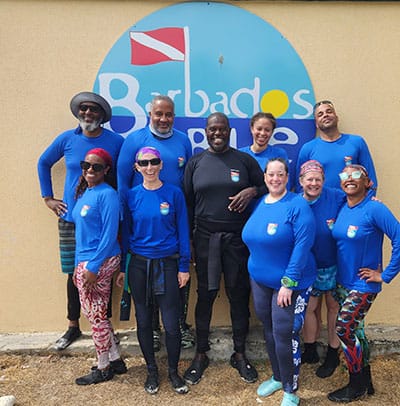
The vibrant underwater world of Barbados’ Carlisle Bay buzzed with purpose this past June, as a dedicated team of citizen scientists gathered for a week of intensive training in data collection efforts aimed at saving the coral reef ecosystem. This collaborative mission, a testament to the power of international partnership and shared environmental stewardship, brought together individuals from diverse backgrounds across the United States – California, New Jersey, Indiana, New York, Washington D.C., and Miami – united by a common passion for ocean conservation.
At the heart of this vital project was a deep-rooted partnership between the visiting citizen scientists and Barbados Blue, a renowned local organization led by Andre Miller and his skilled team of marine scientists. Barbados Blue plays a pivotal role in the protection and management of the marine protected area within Carlisle Bay, making their expertise and intimate knowledge of the local ecosystem indispensable to the monitoring mission. This alliance, spearheaded by CARES, began cultivating a relationship with Andre Miller and his team in 2024, sparked by the compelling words of Prime Minister Mia Mottley. Her powerful address on the profound and disproportionate impact of climate change on Caribbean islands resonated deeply, highlighting the urgent need for action and collaboration.
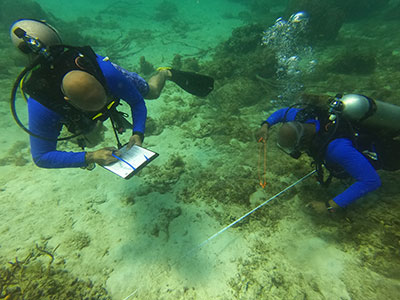
Over several intensive days, the citizen scientists, under the expert guidance of Barbados Blue’s marine biologists, immersed themselves in the intricate process of coral reef assessment. The teaching methodology of Reef Check’s protocol focuses on determining reef health by assessing the presence or absence of key indicator fish, invertebrate, substrate, and reef-building coral species. Equipped with specialized training and tools, the teams meticulously gathered data using precise survey techniques.
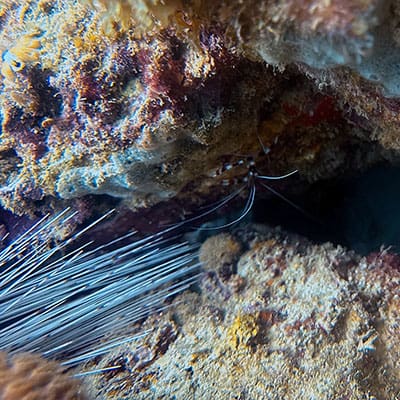
A significant component of this training involved conducting fish, invertebrate, substrate, and roving reef-building coral surveys, each offering critical data important to assessing overall reef health. Fish surveys are becoming increasingly challenging due to the pervasive loss of fish biomass resulting from overfishing and the disruptive introduction of the invasive lionfish. All invertebrates are important indicators in determining reef health, but because of the catastrophic loss of Diadema antillarum (sea urchin) that occurred in the late 1980s—an ecological event from which many reefs are still attempting to recover—their presence on the reefs in Barbados is particularly inspiring, suggesting a positive trend within these marine protected areas. These sea urchins are crucial grazers that help maintain algal balance on the reefs, and their absence has led to the current overabundance of algae proliferation seen throughout the Caribbean islands. The substrate survey further enhances understanding, as participants learn to classify the ocean floor into 10 distinct categories, each with an approximate ideal percentage of coverage. The overall coverage of substrate species and their percentages on the ocean floor are vital indicators of reef health. When these percentages are disrupted, the reef’s balance is compromised, and its health declines; an overabundance of any particular organism signals cause for concern. This is substantially different from the waters of the Florida Keys, for instance, where Palythoa, an encrusting zoanthid, is in abundance, indicating a decline in reef health and actively replacing slower-growing reef-building hard corals due to its rapid proliferation.
Part of the profound beauty of the Reef Check protocol lies in the way it allows students to become intimately familiar with the specific area for which they are collecting data. As instructors, we impress upon them to consider their designated survey site as their “entire universe” for the week. With this mantra firmly in mind, they begin to truly grasp the importance of preserving their universe, diligently collecting data on its inhabitants, meticulously identifying all the organisms within it, and ultimately gaining a deeper understanding of its significance in the grand scheme of things. This intimate connection ensures that even after they emerge from the water, complete their surveys, and return to their respective homes, they will forever remember and champion their universe, carrying its importance with them.
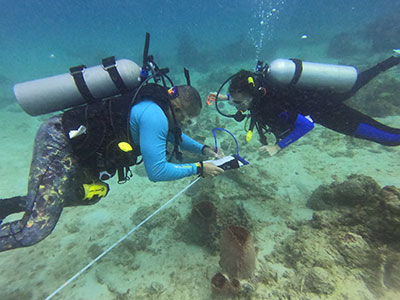
Beyond the immediate data collection, a core goal of this mission was to inspire each participant to forge a deep, personal connection to the coral reef ecosystem. The hope is that this visceral experience will empower them to return home and become passionate advocates themselves, spreading the word about the urgent need for citizen science data collection to document the current state of reef health. Furthermore, this initiative aims to ignite a commitment to ongoing “ocean healing” – encouraging engagement in hands-on efforts such as marine debris removal and, critically, participation in coral nursery maintenance and out-planting work, actively contributing to the restoration of these vital underwater gardens. This holistic approach underscores a broader vision for the dive industry as a whole: to train the next generation of dive professionals not just in technical skills, but to be true ocean advocates, capable of guiding divers on informative excursions that deepen understanding and foster environmental stewardship. CARES is actively working towards this goal by developing ocean advocates from within local Caribbean communities, teaching them the tangible benefits of data collection around their individual islands, and inspiring them to become marine scientists who will lead future conservation efforts.
Looking ahead, a significant objective of this ongoing collaborative effort is to build a dedicated cadre of youth divers from the U.S. to partner with their Barbadian counterparts. This next generation of marine stewards will be rigorously trained in coral ecosystem monitoring, with their collected data providing crucial insights to policymakers both in Barbados and across the wider Caribbean region, fostering informed decisions for regional conservation.
The success of this monitoring effort in Barbados serves as a powerful reminder of what can be achieved when communities, organizations, and individuals transcend geographical boundaries to address pressing global issues. Our ultimate goal is to transform every scuba diver into a CARES ocean advocate, trained to collect data on the health of the coral reef so that we are all better informed about human impact on the ocean and what we can do to correct it. Anecdotal information isn’t scientific data collection, and without data, it’s all just an opinion. In the face of escalating climate change threats, the health of our coral reefs—vital ecosystems that support marine biodiversity, protect coastlines, and sustain livelihoods—is increasingly precarious.
Initiatives like this underscore the critical role of citizen science in collecting widespread data and raising awareness, while also highlighting the immense value of supporting local expertise and leadership in conservation.
As the citizen scientists returned to their homes, they carried with them not only data sheets and memories of Barbados’ stunning reefs but also a profound understanding of their role in a larger global movement. The partnership between CARES, Barbados Blue, and these dedicated volunteers exemplifies a beacon of hope, demonstrating that through collaboration, education, and unwavering commitment, we can work towards a healthier, more resilient future for our oceans and the communities that depend on them.